The 'Burbs: Where the Dream Sequence Becomes a Nightmare
Cinematographer Jonathan Furmanski breaks down the Steadicam work, cul-de-sac lighting, and homage to The Exorcist that fueled the reboot series' darker, scarier tone.
Inheriting the DNA of the Original
In December 2024, I received a call about a new streaming reboot of the 1989 film The ‘Burbs, directed by Joe Dante and starring Tom Hanks. As a big fan of the film, I was thrilled by the opportunity, and a month later we were in pre-production on the Universal Studios backlot, at the very same cul-de-sac where the classic satire was made.
Our series shares much of the original’s DNA: the isolated suburban block; eccentric, yet well-rooted neighbors; and the arrival of mysterious strangers in a derelict house all filtered through a lens of paranoia and suburban voyeurism. Keke Palmer stars as Samira Fisher, a new mother recently moved into her husband’s childhood home. As Samira settles into suburban life, she’s increasingly unsettled by the creepy “Victorian” house across the street, its new and hostile owner, Gary (Justin Kirk), and the house’s connection to a teenage girl’s mysterious disappearance 20 years earlier. Is Samira being irrational, or is something truly sinister going on?
The eight-episode season allowed us to go much deeper into weirdness, obsession, and the everyday tension of suburban life than the original 100-minute film, and our goal was to push into darker, scarier territory without losing the fun. We wanted the photography to feel naturalistic, yet richly colored — leaning into the anxiety of a world in which everyone is always watching each other, while still allowing for more theatrical, heightened beats. Showrunner Celeste Hughey gave us the freedom and encouragement to take big creative risks, and Susie Mancini’s layered and tactile production design helped bring the show to life, as exemplified by the surreal opening dream sequence in Episode 2, directed by Jeff Byrd.
An Exorcist-Inspired Steadicam Oner
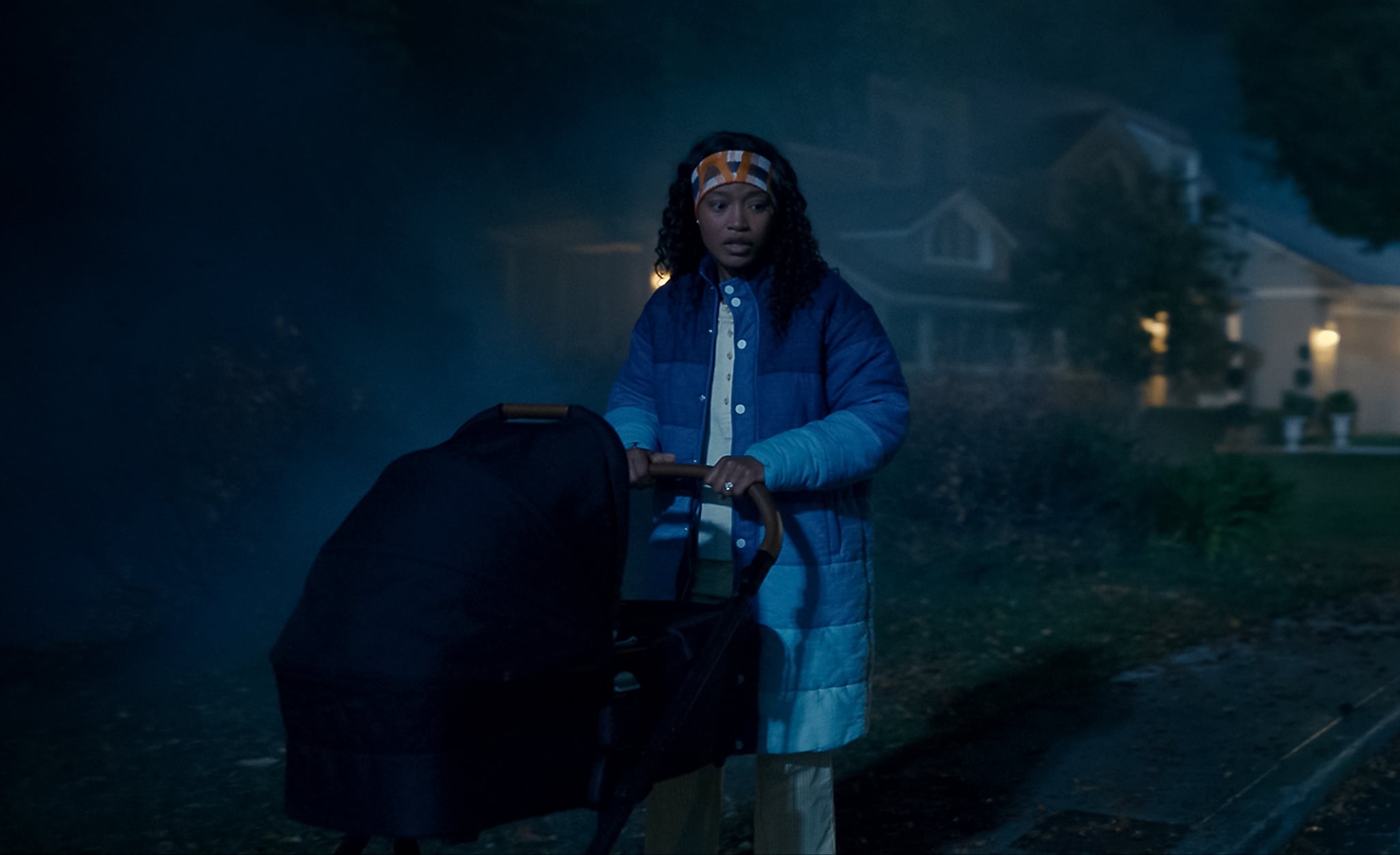
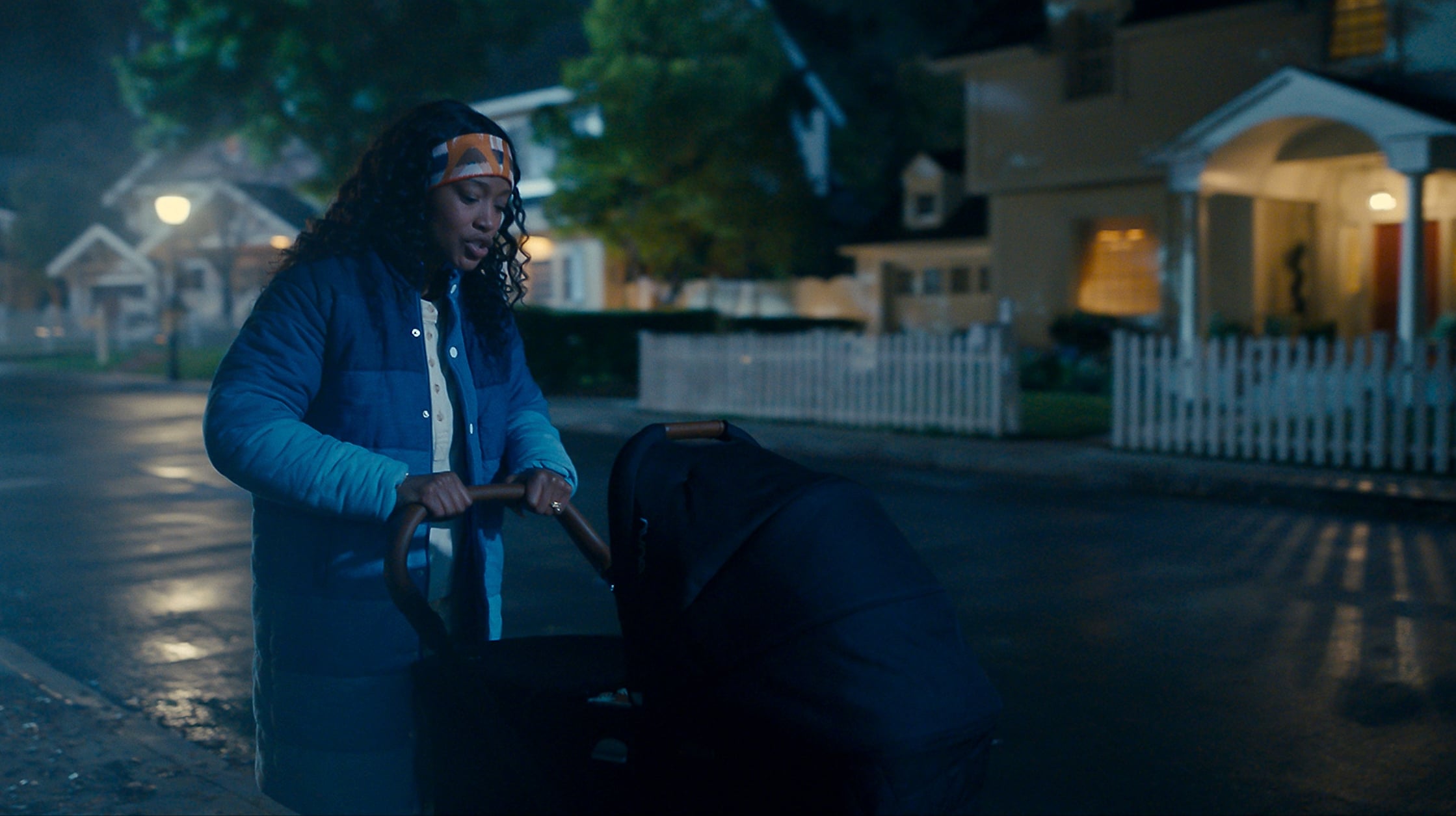
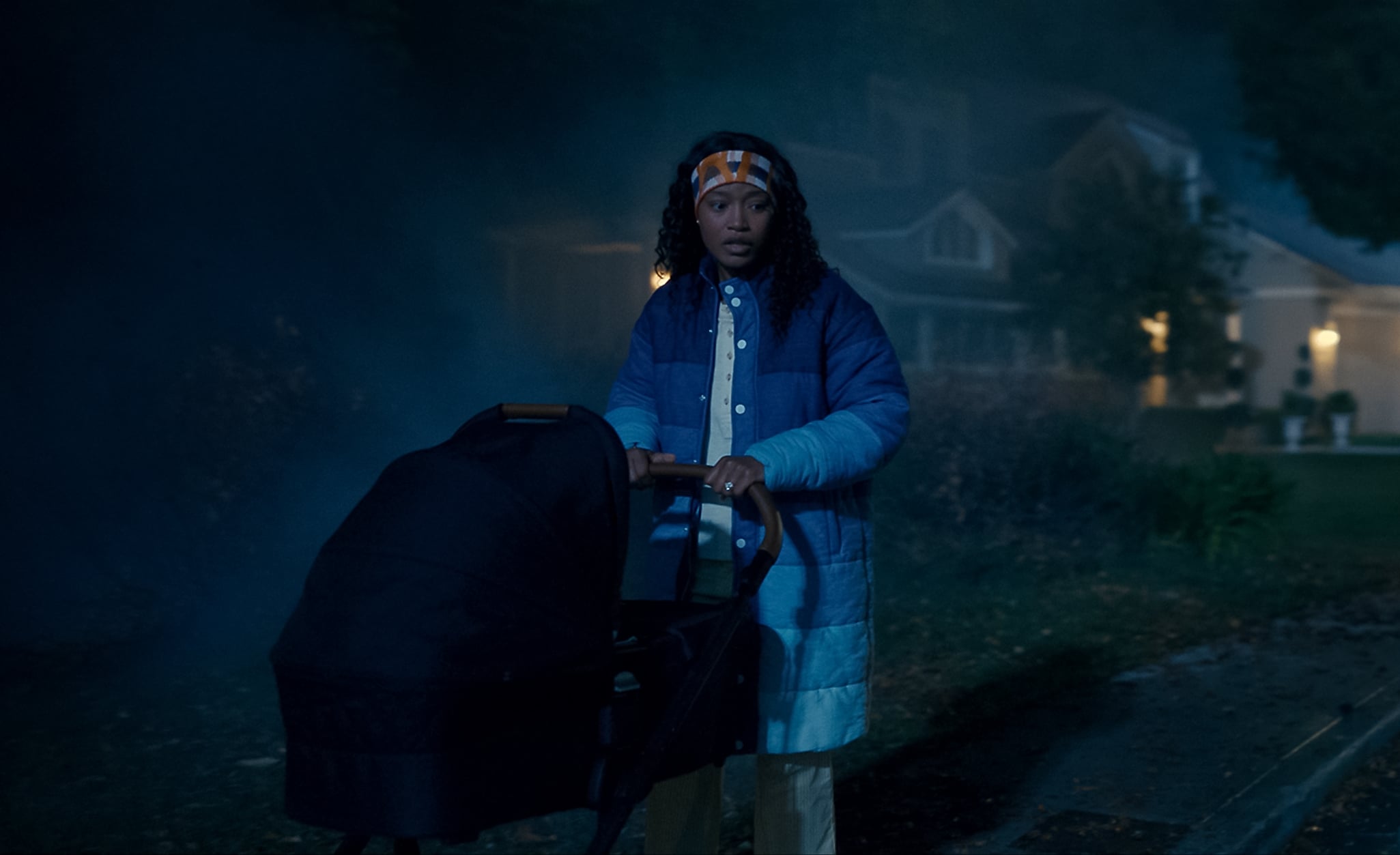
The sequence opens with Samira walking her baby, Miles, in a stroller on the cul-de-sac late at night. She then runs into a nightmare version of the Victorian house after Miles suddenly vanishes. When I first read the scene, I envisioned a silhouette, inspired by the famous shot of Max von Sydow from The Exorcist, shot by Owen Roizman, ASC: Samira in a dramatic shaft of light, rushing to rescue her baby.
Watch Owen Roizman, ASC detail the making of the "poster" shot for The Exorcist, which influenced Furmanski's approach to The 'Burbs:
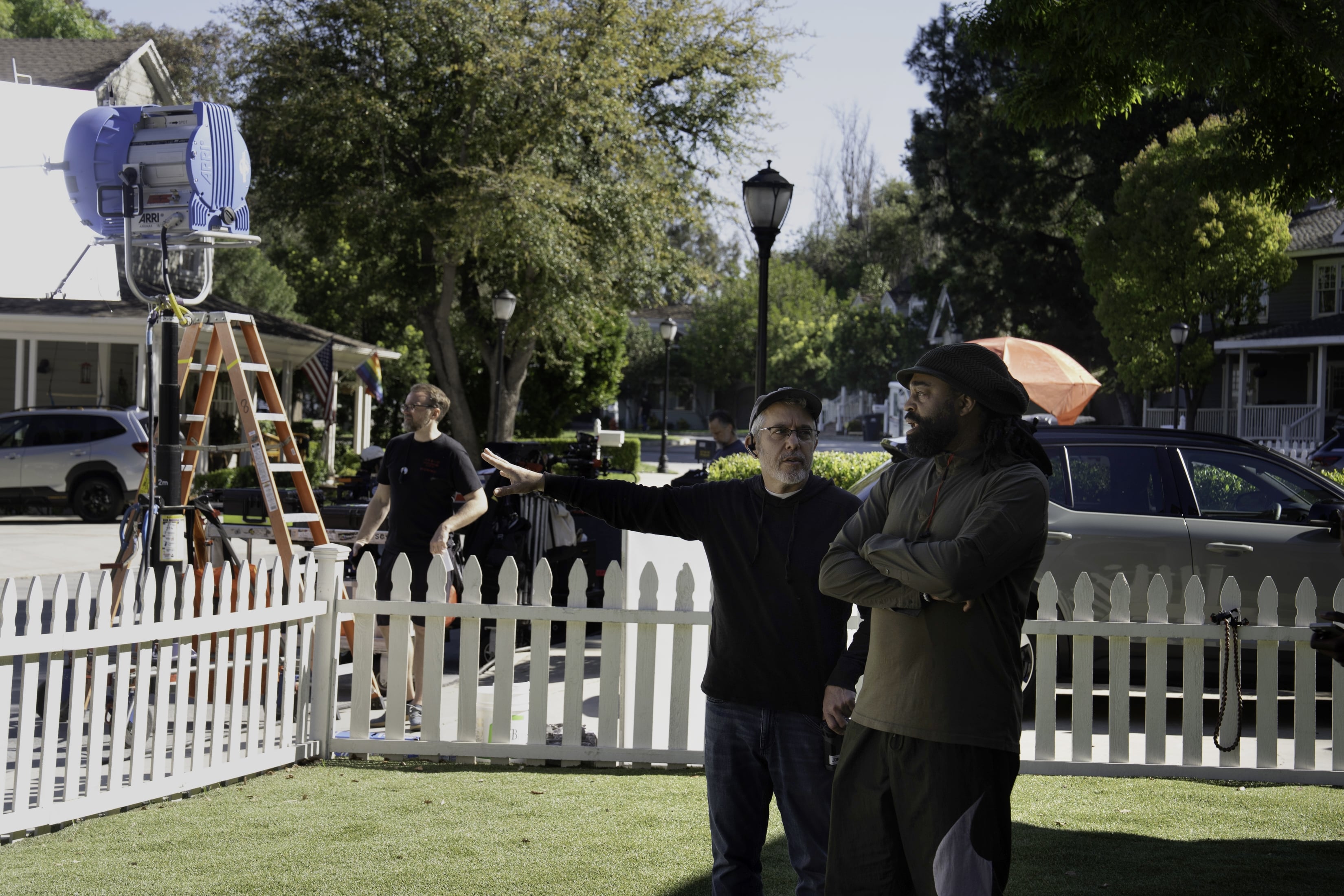
I suggested the homage to Jeff at our first meeting and he loved it. Jeff wanted to reference other classic horror films, like Poltergeist and The Omen, for the scene’s interiors, so this felt like the perfect bridge from outside. Unfortunately, as is the case with many shows these days, Jeff was prepping while I was shooting the pilot. We could only meet when I was at lunch or if he stopped by set, as his schedule allowed. Still, he was firm on one request: The whole exterior portion should be a Steadicam oner.
The Red-Blue Police Cue
A late script revision brought a new technical challenge: After Samira finds Miles’ empty stroller inside the Victorian house, all the practical lights begin flashing red and blue, calling back a scene from the pilot where Samira is racially profiled by Gary and the police. Gaffer Jeff Chin and his team searched far and wide for wireless RGB bulbs to fit the motley fixtures in the Victorian set, and he and programmer Owen Simmons developed cues from our existing tungsten look to something that perfectly mimicked the police flashers from the pilot.
Lighting the Cul-de-Sac for 360 Degrees
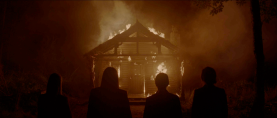
We filmed the exterior part of the sequence first. The shot begins tight on baby Miles in his stroller before widening and circling to reveal Samira and her neighbor, Tod (Mark Proksch), passing by on a recumbent bike. The camera then pushes back in on Samira and the empty stroller as she realizes Miles has vanished, pulling back wide to reveal the stroller itself has disappeared. Finally, as Samira hears Miles’ distant cries, we pull back to a very wide frame as she rushes toward the wrought-iron gate of the Victorian house, pausing for our Exorcist-inspired light to fade up before she enters the home.
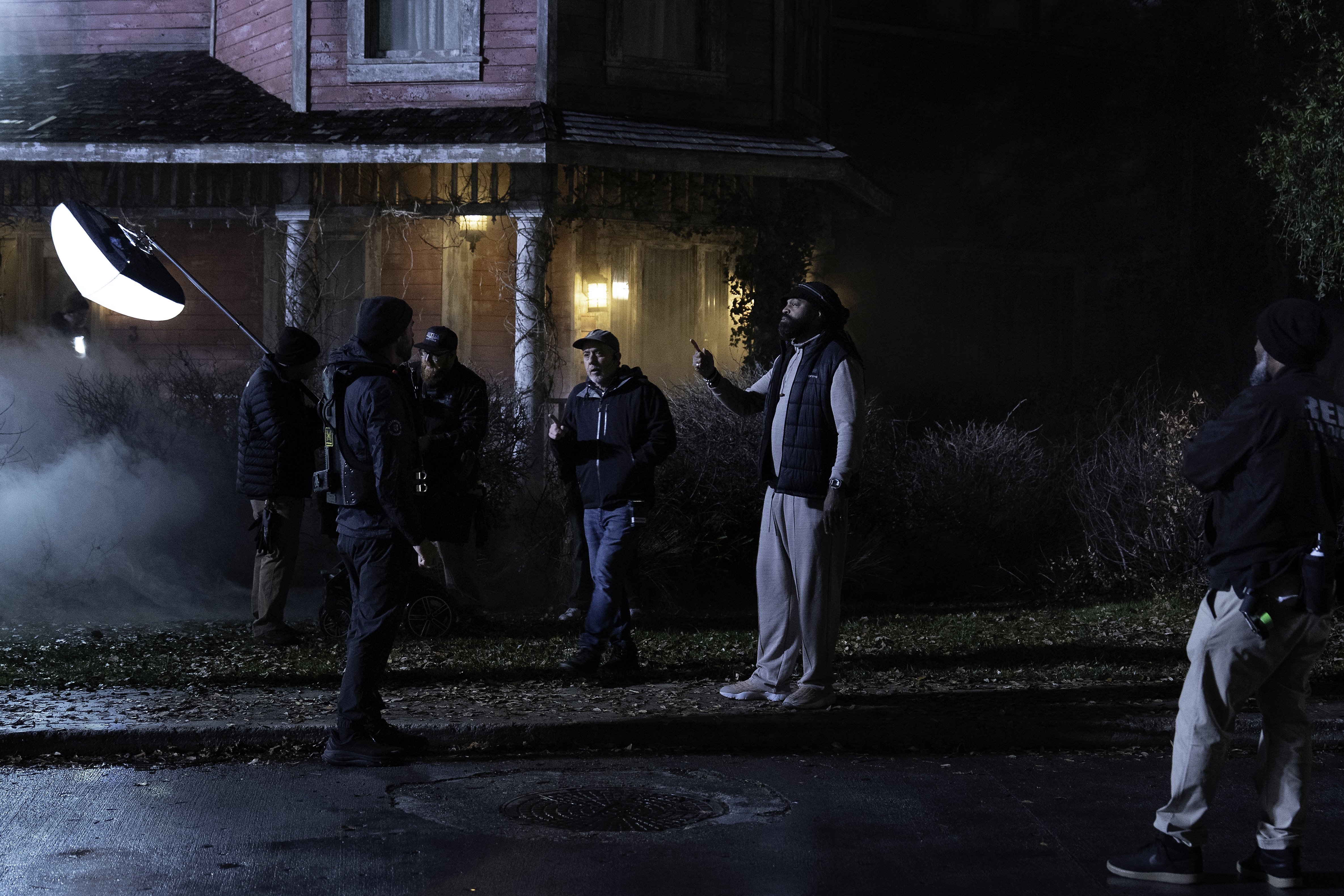
I began shaping the light with Jeff Chin while operator Tom Valko worked with Jeff Byrd to dial in the move. Besides framing, Tom had to dodge the recumbent bike, move on and off the curb a few times, and figure out Miles’ and the stroller’s disappearances. You can’t safely grab a baby out of a stroller in the few seconds the shot allowed, but our always-ready prop department had a backup stroller, so the stroller with Miles rolled out and an empty one rolled in. Easy! Still, it was a true 360-degree oner of the backlot set, going from close to wide to very close to very wide. (Shout-out to 1st AC Ryo Kinno for great focus pulling!)
Our cul-de-sac lighting featured a Condor crane at each end of the block, both rigged with two Arri SkyPanel 360-Cs and three Ayrton Rivale-Profile LED movers set to 5600K, to provide a broad moonlight base complemented by hard, focusable beams. We balanced this with hundreds of practicals — interior lights, porch lights, architectural lights, lawn and walkway lights, street lamps, etc. — set between 2300-2900K for color contrast, all with wireless control. The setup allowed us to shoot in any direction with minimal lighting on the ground, control depth with a quick dim, or chase lights in-shot to maintain our look as the camera moved around.
As flexible as the lighting setup was, there was one place it couldn’t reach: inside Miles’ stroller. We needed to see Miles, then not see Miles, without shadows from Keke or the camera. The lighting team quickly solved this by rigging two battery-powered LiteGear LiteStix inside both strollers. James Ochoa’s SFX team brought in some eerie fog, we had our dramatic Exorcist shaft of light — another Rivale-Profile mover at 5600K — and seven takes later, we had the shot. We then moved down the hill for our stage work.
Inside the Victorian: Hallway and Possession
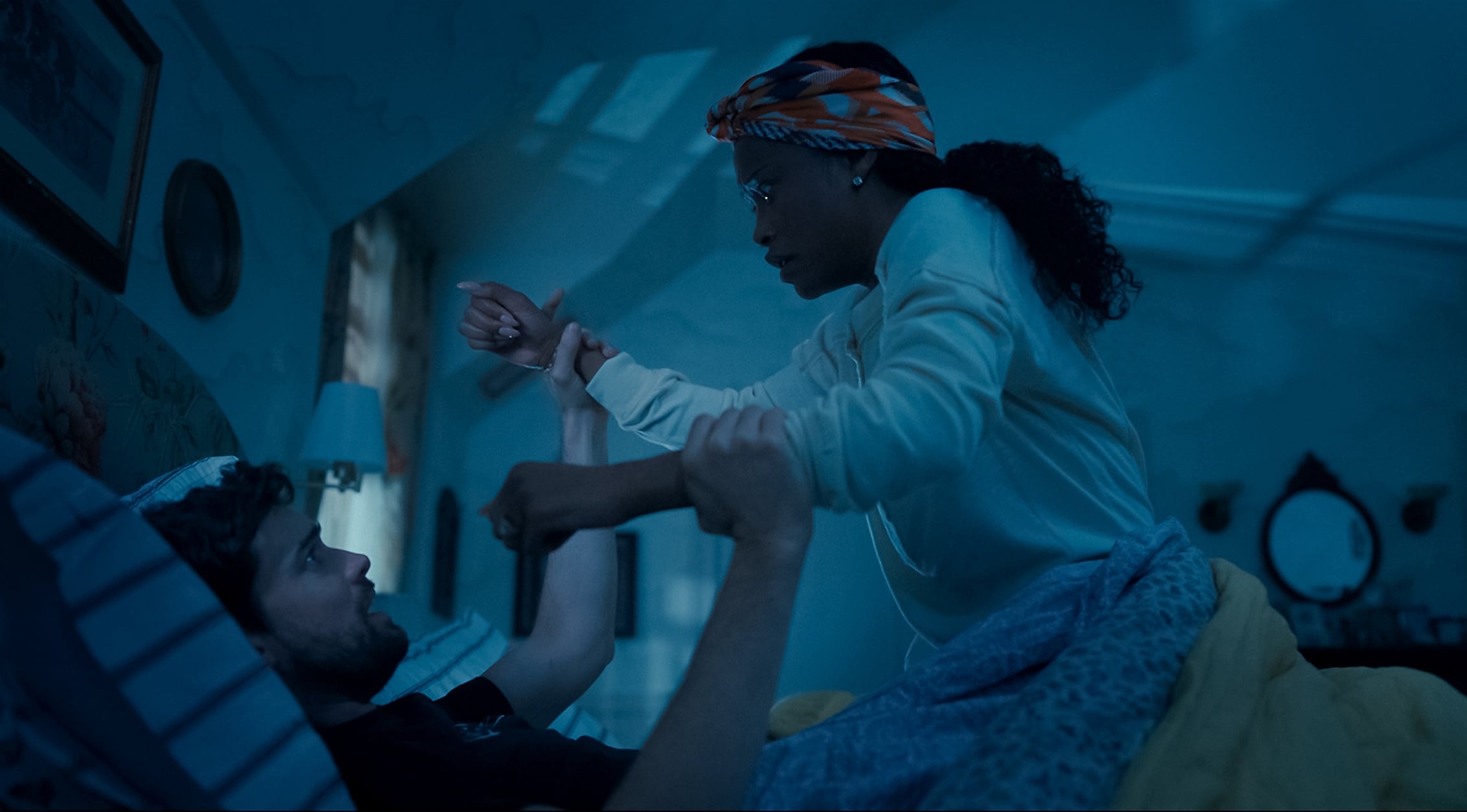
Within the Victorian house, the scene picks up Samira at the end of a long second-floor hallway. She hears Miles crying from a room at the opposite end but an unseen force holds her back. Samira claws and crawls her way forward, finally reaching the door. Inside, the room itself is possessed: windows slamming, chandeliers swinging, and the stroller bouncing — some serious, and literal, heavy lifting by the SFX department. The stroller is there, but Miles is gone. When Gary suddenly appears in the doorway, Samira attacks him, convinced he has kidnapped her son. At the height of the melee, she suddenly wakes at home in bed, thrashing her husband, Rob (Jack Whitehall).
Lighting the Victorian hallway was straightforward: a combination of wall and ceiling practicals set between 2300K and 2700K (pre-programmed for the red/blue police cue) and a 20K Fresnel with CTB pushing through an oval window. Thick haze caught the light, and by micro-adjusting the 20K, we could light the hall as much or as little as we wanted, highlighting the richly-textured work of our outstanding art and set-decoration departments. The real challenge was carving out space for a second camera; operator Marc Carter found nooks and crannies (and a mirror!) to sneak off some fun, unexpected angles. We also employed a custom diopter, developed by Guy McVicker at Panavision, to create a swirling distortion that underscored Samira’s frantic state — an optic we used again some episodes later for a more romantic effect, go figure.
Inside the room, we continued the approach, adding a couple of floor units to ensure Keke popped against the chaos. Looking for a way to ground the stroller in the frame and further stylize the mayhem, I placed a warm backlight behind the stroller to create a corona effect. It felt like a subconscious nod to the 1970s and '80s horror tropes we’d been referencing, and a way to vividly highlight the stroller as it shook.
Grounding the Horror in Character
When Samira finally wakes mid-struggle, the nightmare has passed, but the unease remains. We picked an extreme low-angle frame on Samira, and rather than pushing moonlight onto the walls or floor, we aimed our sources directly at the ceiling to create fractured crossing patterns from the windows — a subtle visual metaphor for her increasingly unstable world. As Rob calms Samira and she settles back into bed, the camera slowly pushes in, emphasizing her fragility.
Ultimately, the sequence was a joy to shoot and I hope it gives the audience an exciting visceral window into Samira’s state of mind. As happy as I am with the cinematography, my real pride lies with our crew; it was a true “all hands” effort that made the scene what it is.
Unit stills by Elizabeth Morris. Images courtesy of Peacock.
Up Next:
Watch Jonathan Furmanski's Interview on Shooting the Award-Winning Series The Dropout
Learn How Owen Roizman, ASC Filmed The Exorcist