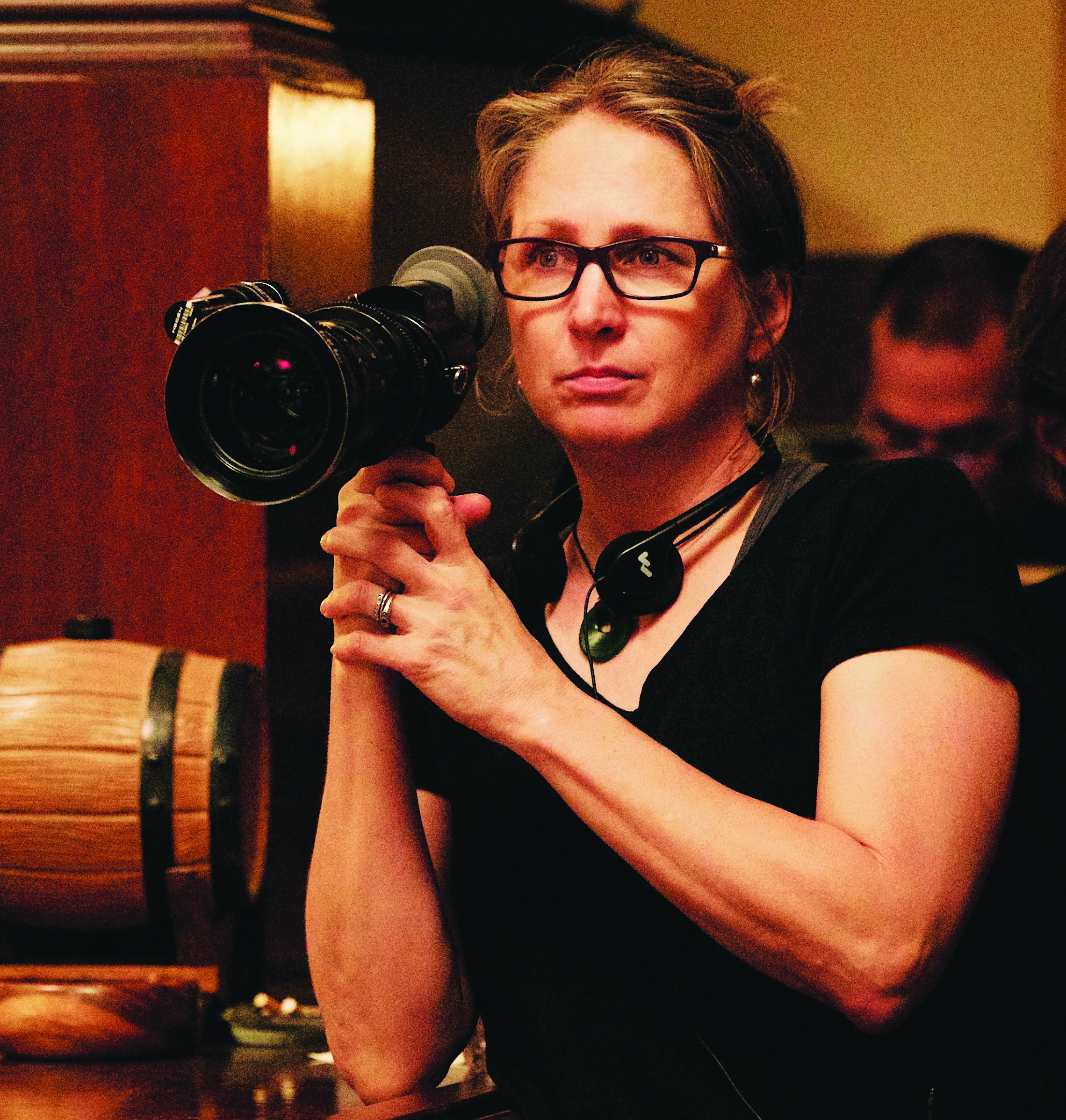
Cynthia Pusheck, ASC: Vision, Outreach and Inclusivity
The Society honors a remarkable career filled with creativity and pioneering contributions.
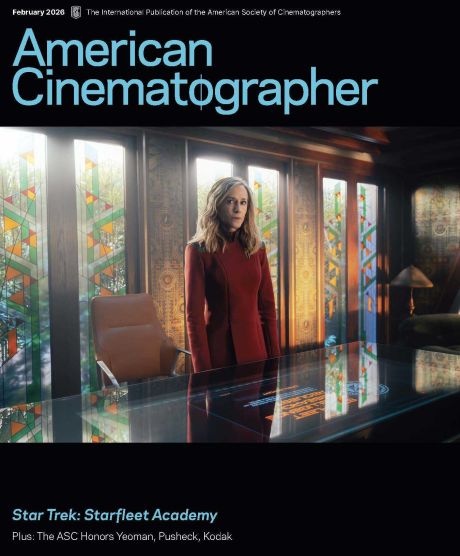
This article appears in American Cinematographer's February 2026 issue. For full access to our archive, which includes more than 105 years of essential motion-picture production coverage, become a subscriber today.
During a recent Board of Governors meeting, the ASC Awards Committee began its discussion about who was on the short list for the upcoming Presidents Award. The Society honors members selected for this recognition based on extraordinary dedication and service to the organization and the cinematography community.
“There was this funny moment,” recalls Cynthia Pusheck, ASC, “where a couple people started turning to me.” It was then that she realized that she was being considered for this year’s award. “I was honored but also a bit intimidated. I don’t particularly like to be the center of attention.”
Nevertheless, as a member of the ASC Board of Governors, a former vice president — the first woman elected to that post — and a founding co-chair of the ASC Vision Committee (with John Simmons, ASC), Pusheck certainly fits the bill. In fact, one of her first considerations following her membership induction in 2013 was how she could best serve the organization. “I realized that this society depends on the time and contributions of so many of our members, and I wanted to find out how I could do my part as well.”
Pusheck grew up in Rockford, Illinois, a medium-sized town west of Chicago, and the thought of pursuing a career in cinematography did not occur to her until she began studying visual arts at Columbia College Chicago in the mid 1980s, enrolling in their “Film 101” course. “It seemed like everyone in the class had been born with a camera in their hand,” she recalls. “I knew nothing, but I was immediately hooked and soon gravitated to the camera and cinematography courses. At Columbia, it was easy to start getting your hands on gear or to crew on student projects.”
Following graduation, she sought work as a camera assistant in Chicago, but “there weren’t a lot of opportunities, especially if you were female. One producer told me that they’d hire a woman if all the guys in town were booked. So, not very encouraging. While working as a 2nd assistant one long boring night on a beer commercial, I remember watching glycerin drops being applied to a beer can and thinking that I needed to find a different path forward!”
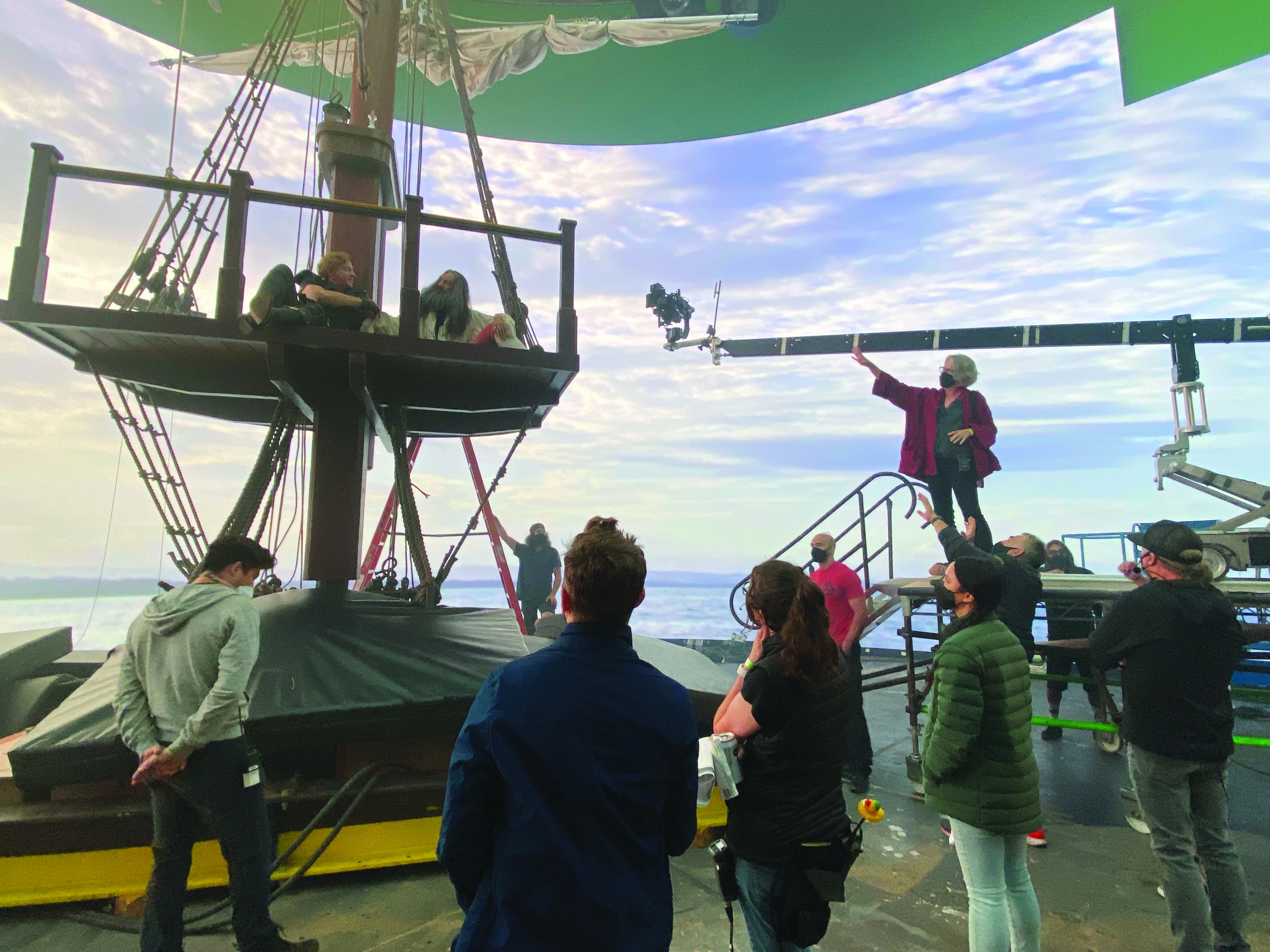
Additionally, she adds, “when Hollywood movies came to town, they brought most of their crew with them, so only a few locals would get hired, and usually just for 2nd unit. I recall watching a film shoot at a restaurant where I worked and just feeling this sense of impatience, knowing that I wanted to find my way onto these kinds of bigger projects.”
That chance came when Pusheck was hired as a 2nd assistant on C camera during the last couple weeks of filming for Field of Dreams, shot by John Lindley, ASC. “I was so green that I didn’t know how to properly slate, or help my 1st get his focus marks! But it was a fantastic experience, adding to my desire to keep pushing forward in camera.”
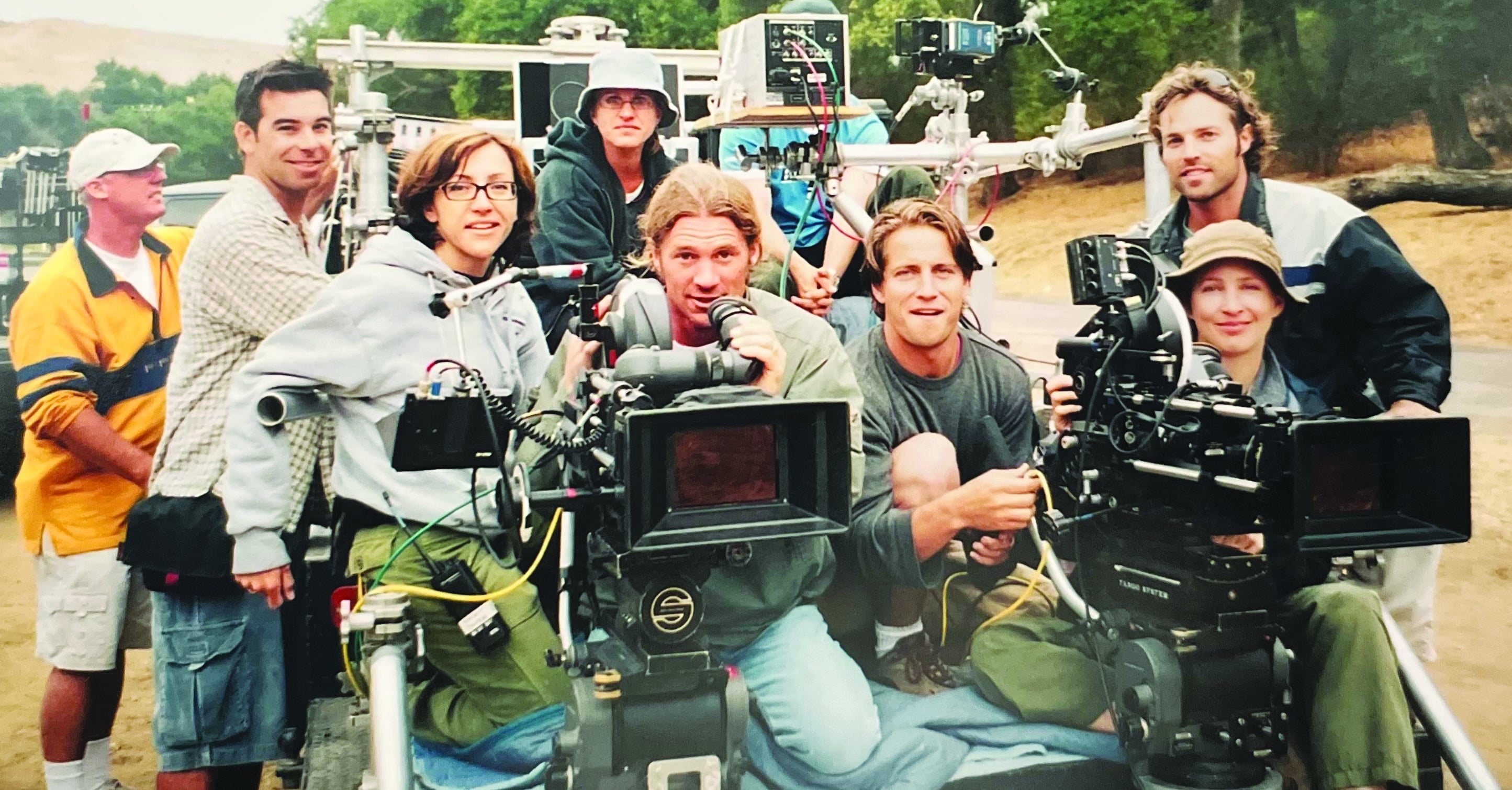
So, in 1989 she moved to Los Angeles, where her first job, on PeeWee’s Playhouse, proved “so fun!” She found that even though L.A. camera crews were still predominantly male, they were more open to having a woman in the department. “It felt like a much bigger playground than Chicago, with a lot more opportunities,” she says. “And there were occasionally even other women in the camera crew! It was a fun time, with a lot of independent films and music videos being produced.” Between jobs, she often headed off to travel — trekking in Nepal or visiting places in Asia and Europe. “I could just come back to L.A., start picking up work for a while, and then take a few months off and go travel again.”
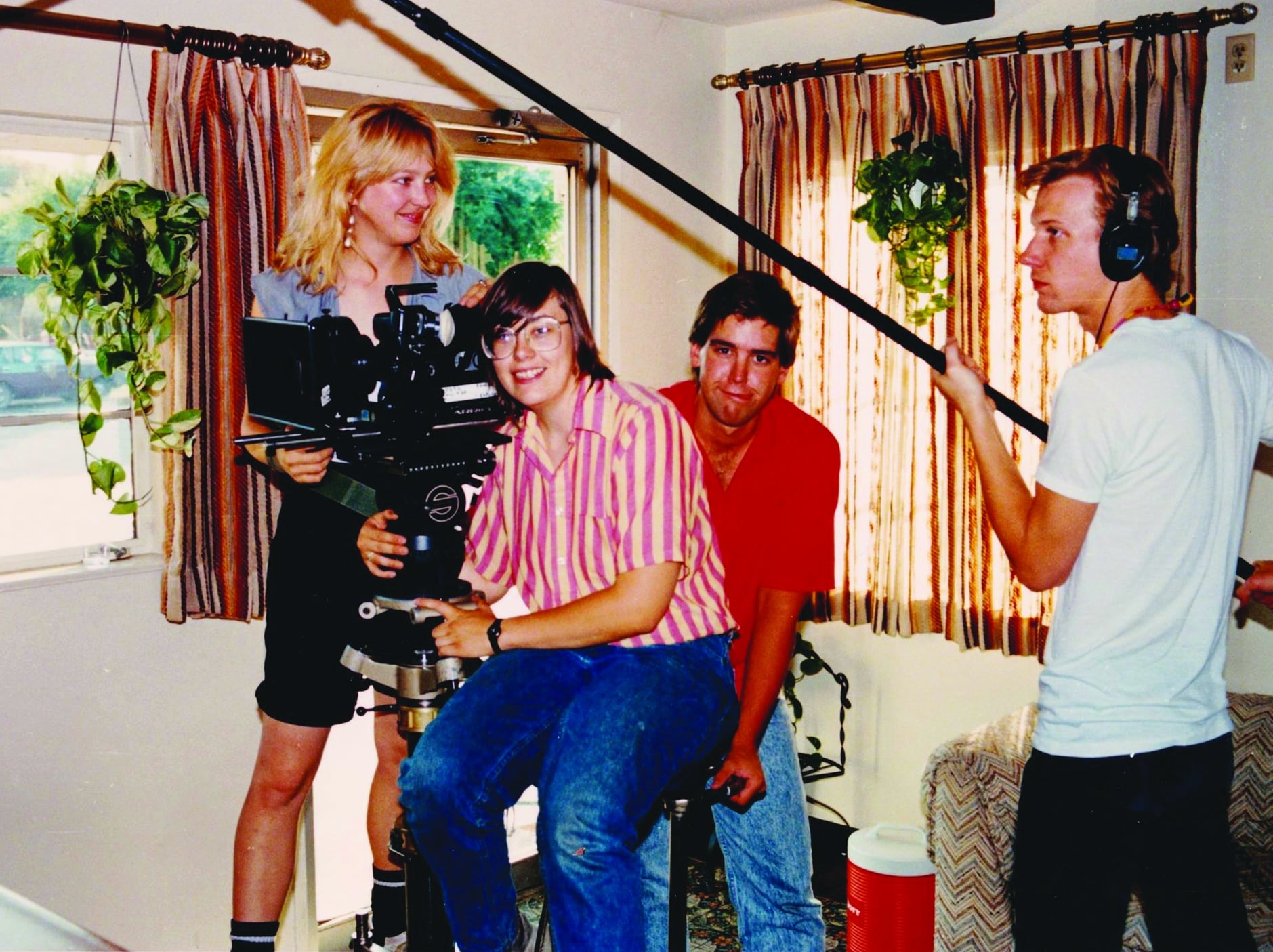
By the mid-’90s, she started getting more committed to pushing forward in camera as a 1st assistant, so the traveling slowed down. She also sought out opportunities to hone her skills and start building a reel. “I was shooting documentaries, short films, student films — whatever I could — but paying the bills as an assistant.”
“She Has Film in Her Blood”
After working with Pusheck on a commercial, Robert Primes, ASC brought her onto his crew for the MOW My Antonia, which would win the cinematographer his first Primetime Emmy. The shoot took place in rural Nebraska during a sweltering summer and involved multiple units. As it happened, there were already two women assistants on A camera. Primes brought in Pusheck as 1st B camera assistant, along with another woman to be 2nd. He recalls, “When I made the decision to hire Cynthia, it was not because I wanted to be the first movie to have four women camera assistants. It was because she was damn good, and I wanted her talent. Cynthia had been around the world; she was a real adventurer; she was the opposite of a shrinking violet, whatever that is.”
The first test of her mettle came quickly, he adds, during an era when some assumed that female assistants couldn’t handle the physical rigors of the work. “There was a Panaflex camera on a Worrall Geared Head, and it was heavy as hell on sticks,” Primes recalls. “I wanted to have the camera move to the top of a steep hill, and the grips were all very much aware of the effort it would take. Cynthia, without changing expression, threw the pad on her shoulder [and] rocked the camera on its legs so that it balanced perfectly. She had her right hand on the longest stick, which was extended a little bit to take all the weight. She then took off with these big strides, all the way up this big hill — and she wasn’t even breathing hard!” (“I’m pretty sure I was breathing hard,” Pusheck recalls with a laugh.)
Around this time, Pusheck also started to work for underwater cinematographer Pete Romano, ASC, who says, “What I realized at the beginning with Cynthia was that she was one damn hard worker, and I mean that she pulled her weight plus. She was obviously very smart and quite the cameraperson, and she was so interested in the mechanics of things.”
As an example, Romano explains that lenses for underwater work must be specially calibrated underwater with a focus chart. (The housing port itself and the properties of light through water combine forces to render the distances marked on the lens barrel useless.) The process takes some getting used to. At the time, remote-focus units were becoming prevalent on land, but underwater work was still all done next to the lens (actually, the waterproof housing), with the operator and assistant in scuba gear. “Cynthia would be in the water with me, pulling focus, and she did a great, great job,” Romano recalls. “The one that really stands out the most is when we did the opening sequence for Saving Private Ryan, where the guys got shot [in the water]. When those squibs exploded, Cynthia got hit, too, as I did, and the camera. We’ve been through some crazy things, but that’s one of the crazier ones!
“She has film in her blood,” Romano concludes. “We traveled the world, and quite honestly, she’s like a sister to me.”
Pusheck eventually transitioned to operating underwater with Romano, showing what she could do on the James Bond thriller Tomorrow Never Dies. Once she put out the word that she was only operating, offers were slow to come at first, but among the jobs she landed were operating 2nd unit for Amy Vincent, ASC on the feature Biker Boyz and operating on pickups for Primes on the feature Sweet Sweetback’s Baadasssss Song. Primes recalls, “I was setting Cynthia up for a shot that involved panning and some rhythmic stuff, and there was some lighting involved. I told her what I needed and then hopped back to the A-camera set. When I went back to see what she’d done, it was innovative, creative, beautifully polished and more than I had expected. She was just moving into operating then, and I told her I thought she had a great future ahead of her.”
“Ready to Create”
A chance to operate on the colorful series CSI: Miami turned into a steady gig, working first for cinematographer Dermott Downs and then for Thomas Yatsko, ASC and Eagle Egilsson, ASC.
“I just remember how much I loved operating and getting to work regularly on a show, especially after so many years of sporadic work,” she says. “Once my shot was set, I could watch what was going on with the cinematographer and gaffer or listen in when the DP and director were discussing blocking or staging. When you’re on a show for a bit, you can find plenty of chances to pull the gaffer or other crew members aside and ask questions. Of course, you don’t start bugging somebody on day one. But if they see that you’re curious and you pick the right time to ask a question, you can learn a lot about cinematography while working as an operator.”
Egilsson says of her work, “Cynthia shows up solution-based — she comes ready to create, to collaborate and problem-solve, which is the core of everything we do. I’ve always thought a film crew should have a good number of women because they just seem to have a better-regulated nervous system, whereas guys … we’re sometimes running around believing we’re saving the world when, in fact, we’re not.”
By Season 4 of CSI: Miami, Egilsson was bumped up to episode director. Producers gave him a list of male cinematographers to consider, “and they really wanted to hire one of them, but I insisted that Cynthia do it,” says Egilsson. “They didn’t believe that or trust me,” but he vouched for her, “and I have never regretted that.
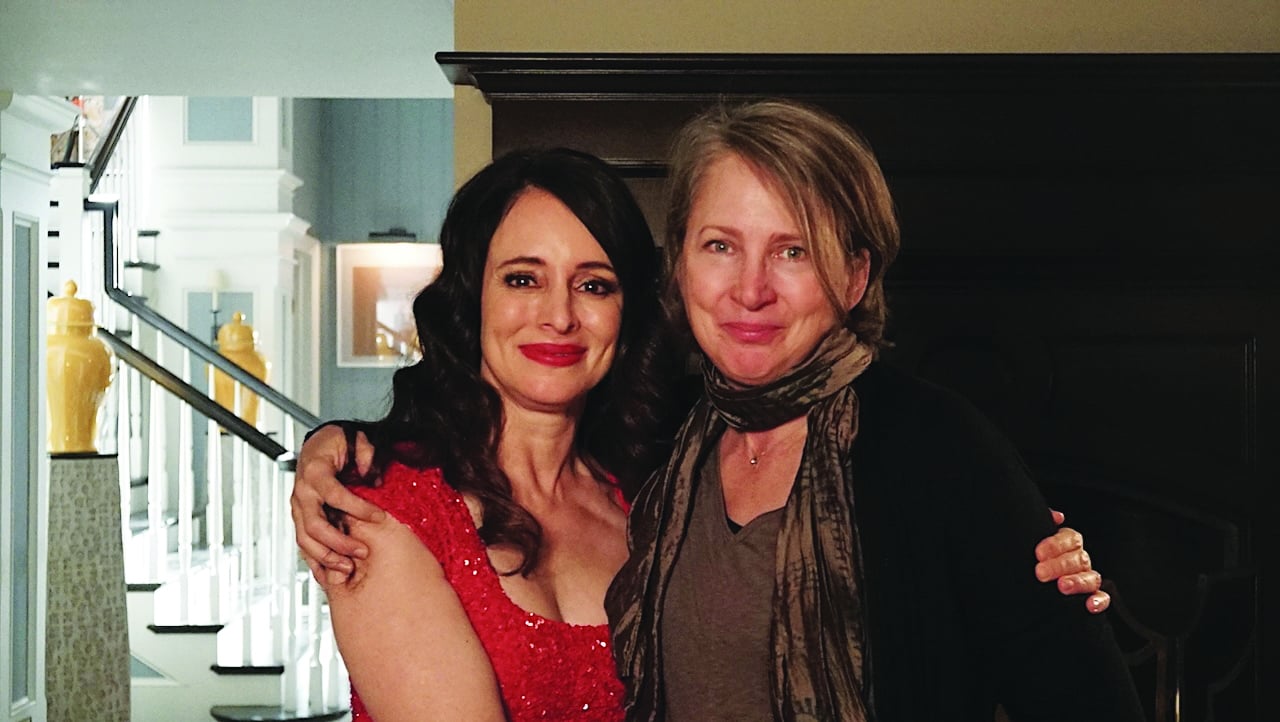
“Cynthia does beautiful work,” Egilsson adds. “She has a good eye with lenses, a good sensibility for lighting, and she’s extremely pleasant to be around. These three elements together make a great cinematographer. You’ve got to be a problem solver. You’ve got to be a leader of people and a steward of the creative, and she is all of that.”
After CSI: Miami, Pusheck shot episodes of Close to Home and Brothers & Sisters, both of which had established visual styles. Mike Kelley’s 2011 series Revenge, starring Madeline Stowe, was another story. After Chris Manley, ASC shot the pilot episode and the show received a series order, Pusheck came aboard and was able to introduce more of her personal touch. “I did the first 22-episode season as the only director of photography. This was before having two DPs was the norm, and it was brutal. Every weekend you spent time prepping with the next director. Every lunch, you were looking at plans for the next episode. But that experience helped me grow as a DP.”
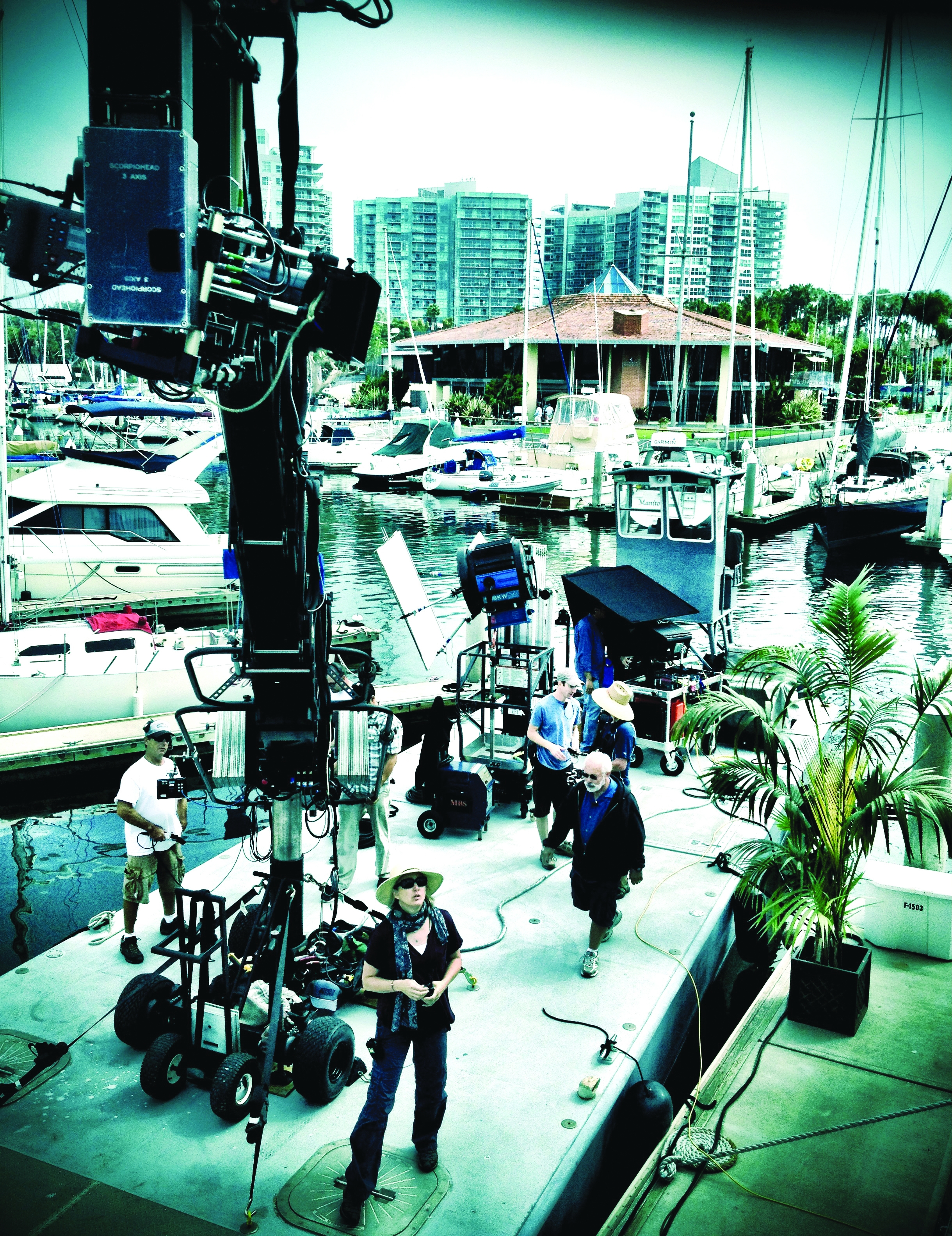
Pusheck has shot quite a few series since then, but she cites Amazon’s Good Girls Revolt as an especially fulfilling experience. Set in the late 1960s, the show centers on an American news magazine and the people, particularly women, who work there. “We all thought it would get a second season, but sadly, it didn’t. That show was really special to me because of the subject matter, the people involved, and the chance to create the style and look of a period show set in New York, even though it shot in L.A.,” Pusheck says. “Steven Fierberg, ASC was the lead cinematographer, and it was a lot of fun to alternate with him.”
The Call
Pusheck was a seasoned cinematographer when Nancy Schreiber, ASC called to ask how she would feel about becoming an ASC member, but “I remember being shocked,” she says. Vincent and Primes joined Schreiber in proposing her for membership in the Society. It was 2013, but “there were maybe only a dozen women in the ASC at that time, including retired members. So, I was incredibly honored, since I had looked up to those women throughout my entire career. The idea that I’d be joining their ranks was something special.
“Male or female, it can be intimidating when you walk into the Clubhouse, or the first time you enter as a member,” she adds. “But the ASC’s members were immediately welcoming to me.”
The Vision Committee
Firmly believing that “all of us, every member, should bring something interesting to this organization,” Pusheck regularly attended meetings, participated in Education & Outreach Committee panel discussions, and eventually served as 2nd Vice President on the Society’s Board of Governors.
But she is most passionate about the Vision Committee, which was initiated in 2015 by then-President Richard Crudo, ASC. The group “came out of a desire for the ASC to do more towards inclusivity and help those who face more hurdles and less opportunities,” says Pusheck, who paired with Simmons as co-chairs from the start.'
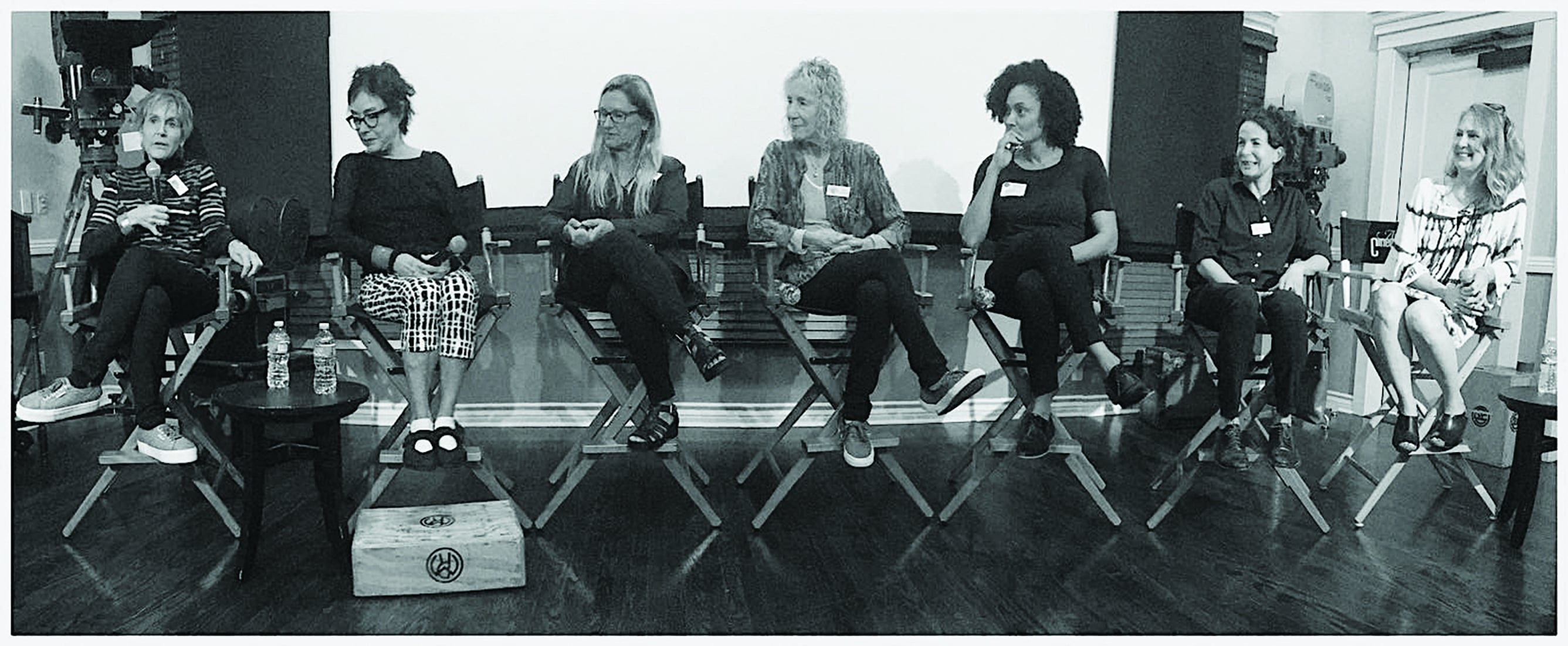
In 2016, the committee produced an all-day Women’s Day event at the Clubhouse, which Pusheck recalls as “a really powerful day, with the Clubhouse full of women. For many, it was their first chance to visit the Clubhouse, and it was great for them to find it a welcoming place. Woody Omens [ASC] walked up to me late in the afternoon with tears in his eyes, saying, ‘This is the best day I’ve ever had at the ASC!’ And there were all these women looking around, going, ‘Look how many of us there are!’”
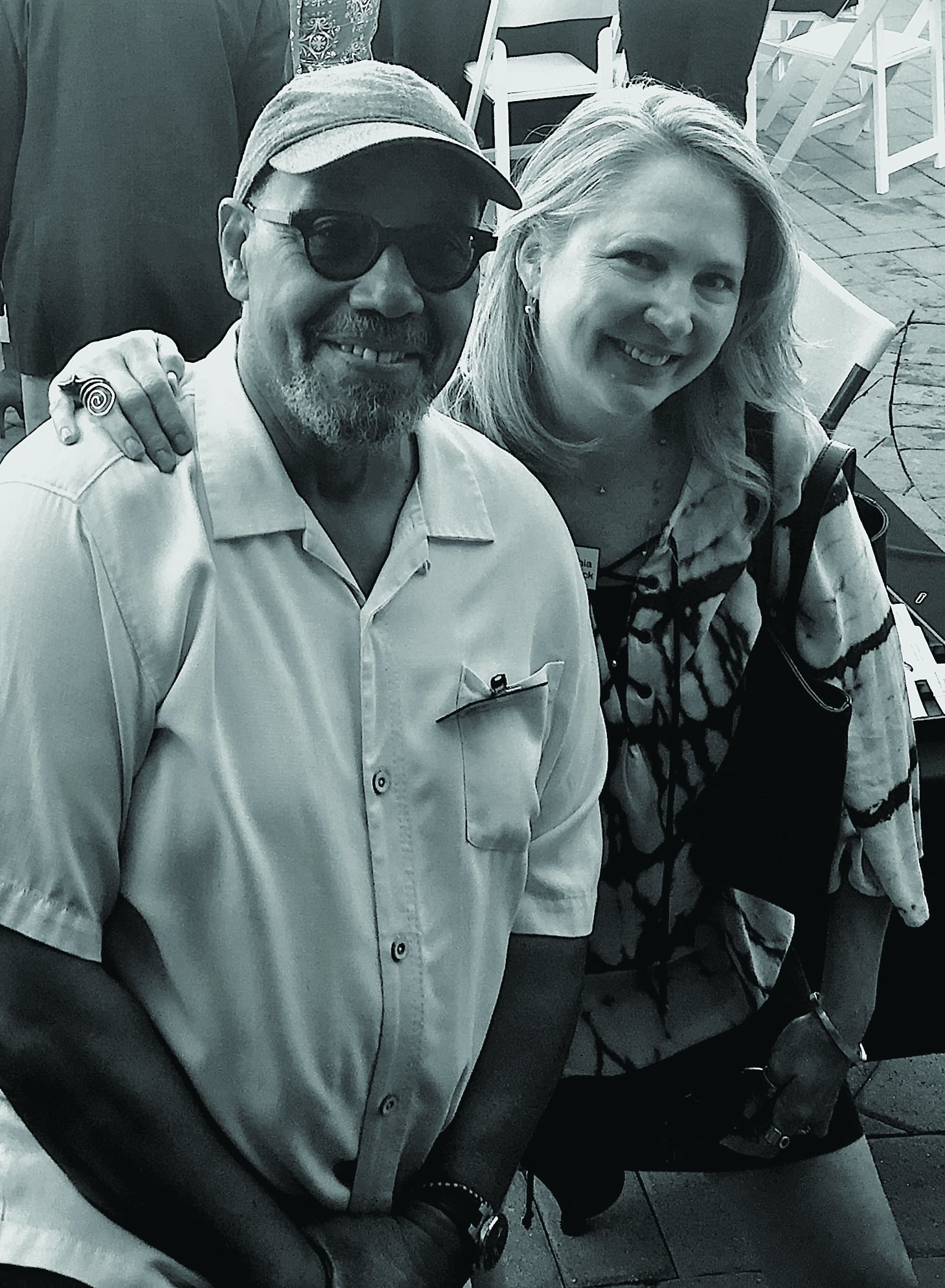
The Vision Committee has since organized several outreach events co-sponsored by the ASC and other organizations and companies, including Sony, Panavision and Women in Media. The committee has overseen day-long events aimed at diversity, including a Crane Day presented with CineMoves (in partnernship with Women in Media) and a Master Class-style event at Sony, where the aim was to create opportunities for underrepresented or financially challenged filmmakers to learn about tools and techniques they might not have encountered otherwise.
In arranging the latter event, Pusheck says, “one group that joined us was from South Central L.A. called the Heart and Soul Center, which is led by a pastor who opens his church after school and teaches kids about different aspects of filmmaking, music and the arts. The Sony Glassell Park facility hosted us, and we presented lighting seminars by Kira Kelly [ASC] and Armando Salas [ASC].” Pusheck’s husband, Society member Barry “Baz” Idoine, was also on hand to teach the group about the use of LED walls, along with other Vision Committee members sharing their time and knowledge.
“I think every time we’ve done an event, there’s been an incredible sense that we’ve touched people. When we finish these events, the attendees are always so excited and energized. It’s quite fun to experience their enthusiasm.”
“It Takes Numbers”
“I used to say that in the early ’90s, there were so few of us [women] in camera that it felt like we were all bobbing along out in an ocean, on our own little rafts,” Pusheck observes. “You can’t really help and support each other much when you’re just figuring out how to stay afloat! It takes time to build the numbers of underrepresented filmmakers, which has happened so much faster in the last decade than ever before!”
Among the points she emphasizes when she discusses pursuing a career in cinematography with hopefuls is the personal toll it can take. She observes, “It was always a question people asked of women in camera: How do you maintain a relationship or a family and work the hours that production requires? I’m so glad that in recent years, men are bringing up these questions, too, because it’s not just a problem women face in the film industry.”
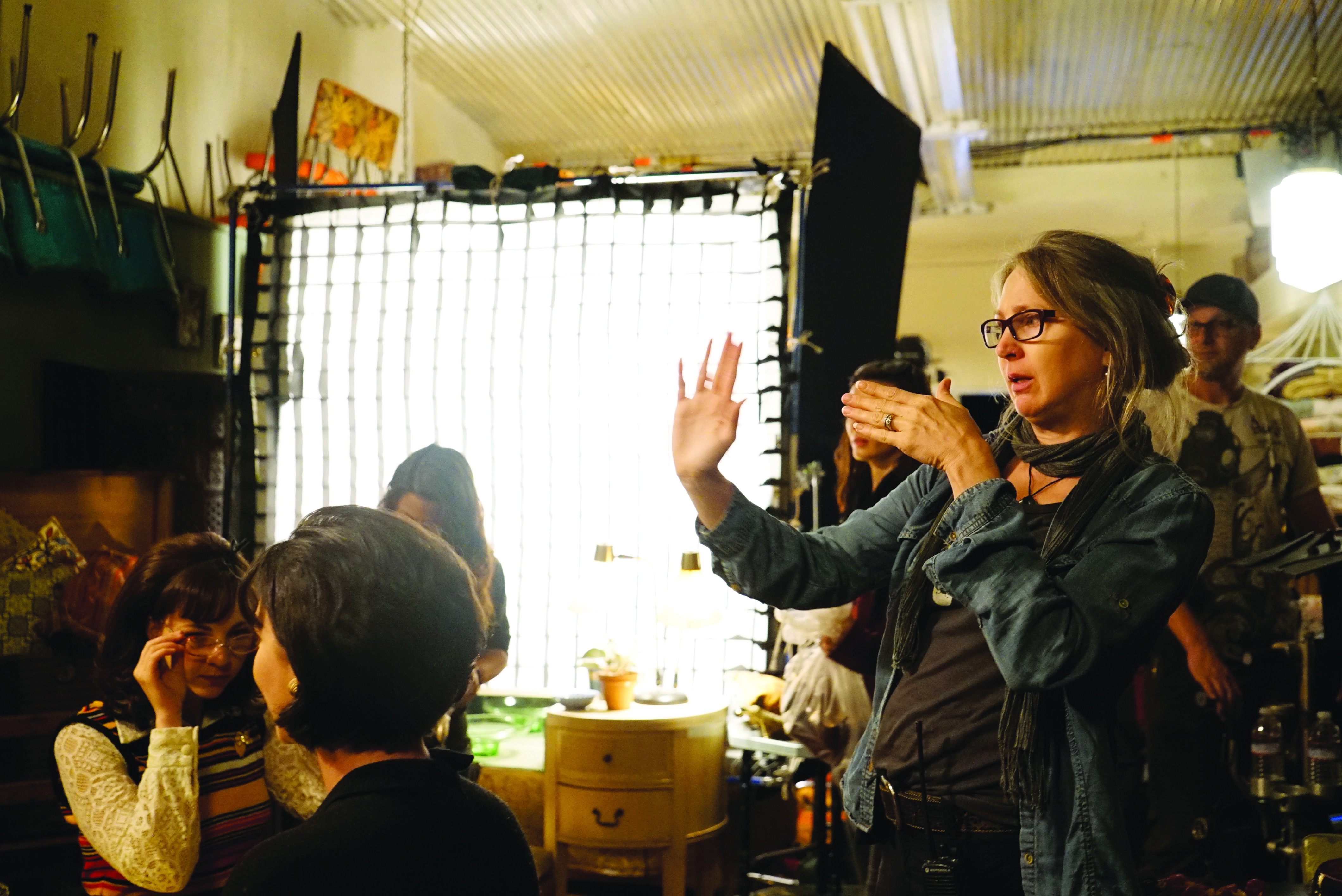
As a married couple working as cinematographers, Pusheck and Idoine put in long hours, but their common careers also mean “we can feel like a team,” she notes. “When we first got together, Baz was a camera assistant who wanted to move up, and I had just started Revenge. So, as a team, I knew it was a perfect time for him to make the move. We understand the challenges involved with two careers, but we’ve found a way to keep it in balance. When one of us is prepping or shooting a project, we understand how it takes up all your time and focus! And when we’re not working, we like to travel, especially to New Zealand.”
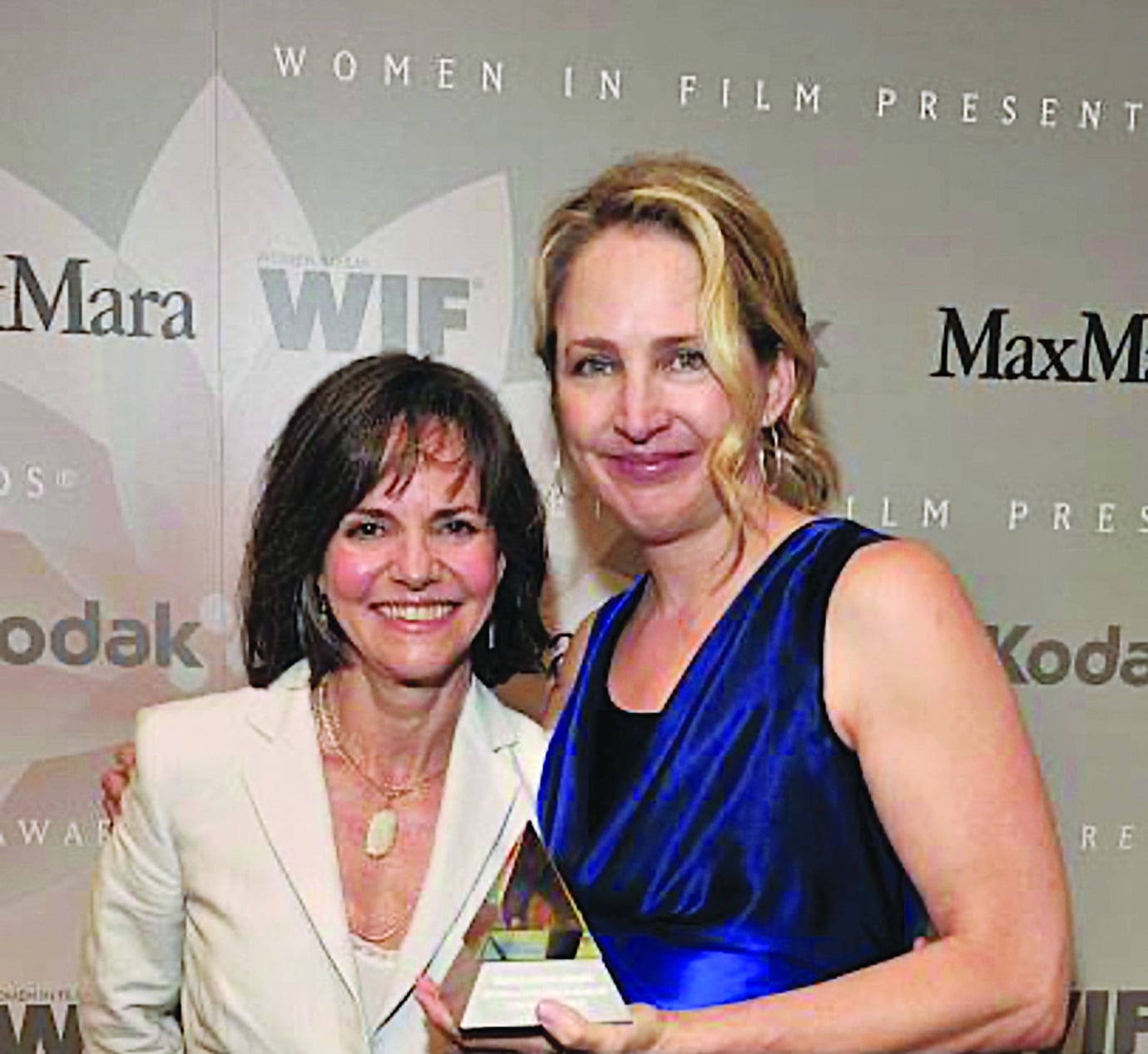
Another serious aspect of the business Pusheck and Simmons touch on in their discussions with others is that the business itself is changing rapidly. “People talk about origin stories, but it doesn’t really matter how I got into the industry, because that industry no longer exists,” she says. “It’s a very daunting time. You look at how many cinematographers are coming out of film schools and sometimes right into shooting — more than ever before. It’s very competitive. You don’t want to be negative with a student or somebody who’s passionate and trying to find their way, but I do think you have to be honest that there will be highs and there will be lows. How do you not take it personally when you don’t get a job? How are you going to recharge your batteries or avoid burnout when building your reel shooting freebies or low-budget projects?
“One reason I’ve loved working on television dramas is because I like telling stories and getting to dive deep into the stories,” she notes. “And I like having time to get to know the cast and the crew. I just love the whole process.”